
Introduction:
A complete cup specification connects the drink menu, serving conditions, approved artwork and order quantities before bulk purchasing begins.
A café buyer receives several quotations for branded paper cups, but the prices are difficult to compare. Capacities look similar, wall constructions differ and the quoted minimum quantity does not explain whether sizes or designs can be combined. Ordering before resolving these details can leave the business with incompatible lids, unnecessary inventory or a cup that does not suit service.
Custom paper coffee cups should be specified as part of a serving system. Define the required sizes and handling conditions, confirm the print specification, then evaluate MOQ and replenishment against demand. This gives cafés and coffee chains a clearer basis for comparing suppliers and approving orders.
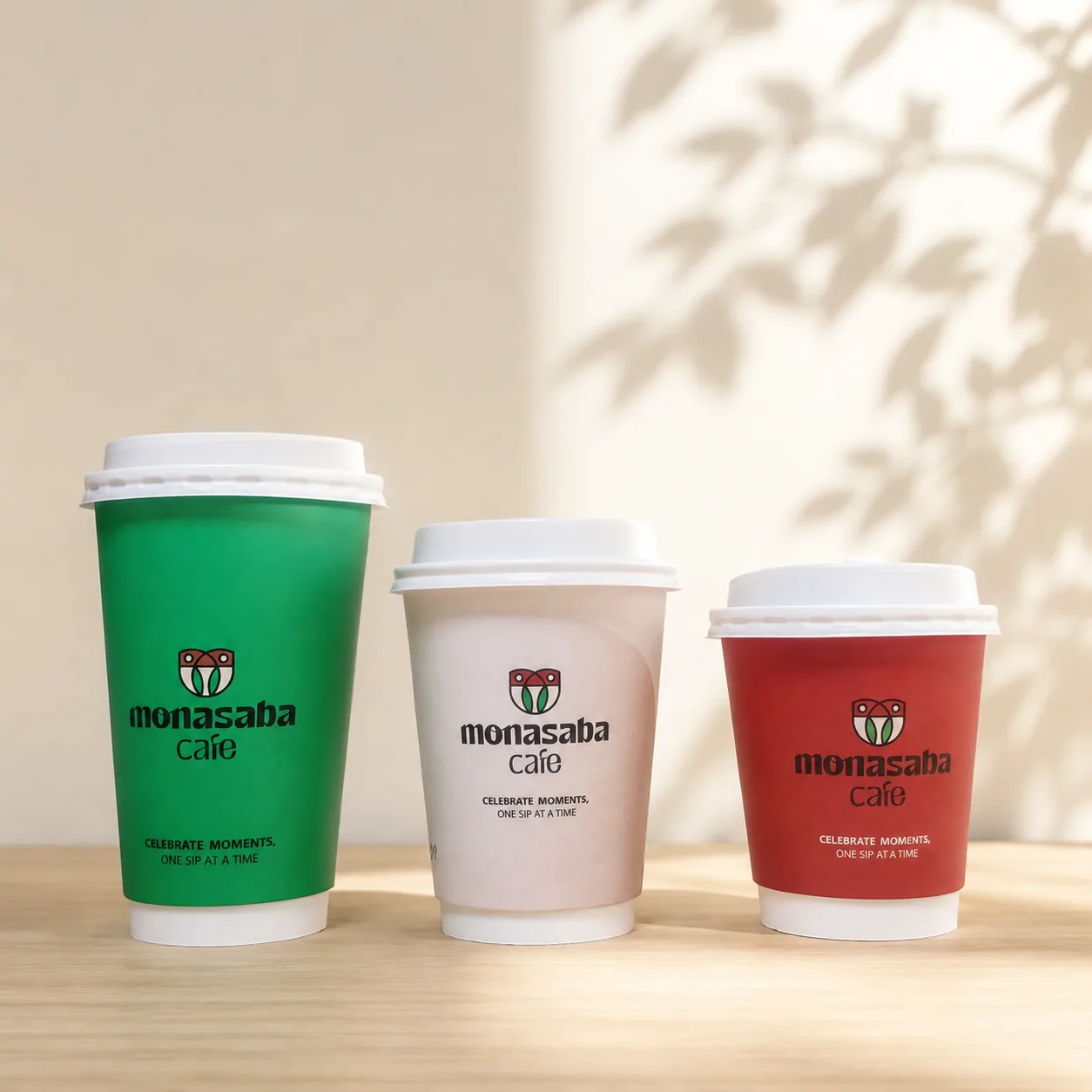
Start with the drinks and serving quantities on the menu. A smaller format may serve short drinks or tastings, while larger formats accommodate other recipes. AT PACK’s custom paper cup product listing includes nominal capacities of 4, 8, 12, 16 and 20 ounces. Confirm availability for the selected construction. The stated capacity does not establish the working fill level: test recipes with the intended milk, foam and clearance below the lid. Choose sizes that support consistent preparation without creating avoidable stock variants.
Record the top diameter, height and approved lid reference for each cup. Two cups with the same ounce designation should not be assumed to accept the same lid. Check the complete combination using representative drinks, including closure fit, handling and placement in carriers. AT PACK’s paper cup collection provides a starting point for discussing capacity, construction and compatible lids together, helping buyers coordinate related specifications before ordering.
Single-wall cups use one paperboard wall with an appropriate liquid barrier. Depending on the drink temperature and handling requirements, a sleeve may be needed. Double-wall cups add an outer layer intended to improve insulation and handling. Select between them using actual serving conditions, rather than assuming that either construction is suitable for every drink. Fill representative samples, follow an agreed handling procedure and observe grip, rigidity and performance over the intended service period.
Compare the complete serving cost. A single-wall cup plus a sleeve involves two components and an additional handling step; a double-wall option has its own unit cost and storage requirements. Check carton dimensions, dispensing and compatibility with existing counter equipment. Request food-contact documentation for the specified construction and destination market. The FDA’s component-status guidance explains the relevance of composition and intended use. Insulation features and food-contact suitability require their own supporting evidence.
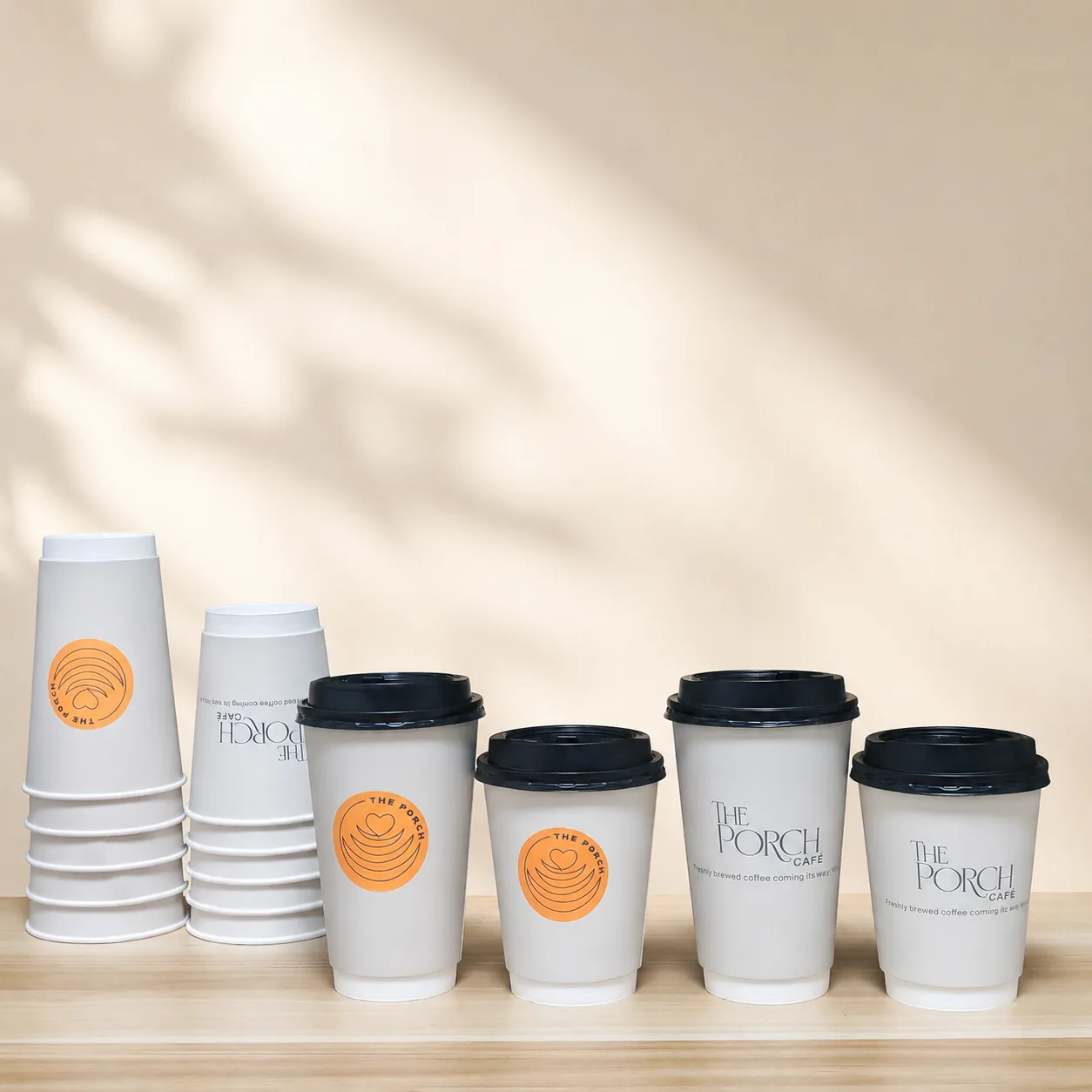
Obtain the production template for each approved size and wall construction before finalizing artwork. A tapered cup changes how graphics appear after forming, and the seam, rim and other restricted areas affect placement. Confirm bleed, safe areas, colour requirements and file settings with the production team. Adobe’s guidance on printer’s marks and bleeds explains the purpose of artwork extending beyond a cutting boundary; the exact settings must match the supplier’s template.
Approve product copy and layout separately from the physical colour reference. Review a formed sample so logos, small text and seam alignment can be assessed in use. AT PACK’s brand identity services cover logo applications, colour systems, typography and packaging guidelines. Linking that work to cup production supports consistent branding across cups, sleeves, coffee bags and takeaway packaging. Confirm available printing and finish options for the specific product, and record which file version is authorized for production.
MOQ means minimum order quantity, but its basis must be explicit. The AT PACK product listing referenced above states 1,000 pieces; treat this as information for that listing and confirm the quotation for the chosen size, material, wall type and artwork. Ask whether the minimum applies per size, per design or to an agreed combined order. Also confirm setup charges, sample costs, carton quantities and any permitted quantity variation. Do not assume that combining several unrelated packaging products satisfies each item’s MOQ.
Relate the commitment to consumption. As a calculation example, 1,000 cups used at 100 per day represent ten days of stock for that specific cup; actual planning needs the sales mix, reserve and full replenishment period. AT PACK combines multiple packaging categories with supply chain services. Its one-stop approach provides a basis for coordinating cups, accessories, branding requirements and delivery planning through a shared brief. Confirm availability and timing item by item, then retain approved samples and reorder references for consistent repeat purchasing.
Conclusion:
The right custom paper coffee cup is defined by its fit with the menu, serving conditions and purchasing plan. Confirm capacity and lid compatibility, test the wall construction, approve the artwork and establish the MOQ basis before placing the order.
Send AT PACK the required sizes, wall preference, lid requirements, artwork, quantities by design and delivery destination to request a coordinated proposal for cups and related packaging.
Q: Are cups with the same ounce capacity interchangeable?
A: No assumption should be made. Confirm cup dimensions, lid fit and the intended working fill using samples.
Q: Does a double-wall cup always eliminate the need for a sleeve?
A: That depends on the construction and serving conditions. Validate handling before deciding which components are required.
Q: Can multiple sizes share one custom-print MOQ?
A: Confirm this in the quotation. A listed minimum does not establish whether different sizes or artwork versions can be combined.
U.S. FDA — Food-Contact Material Components and Intended Use
Adobe — Printer’s Marks and Bleeds
AT PACK — Custom Printed Single-Wall and Double-Wall Paper Cups
AT PACK — Paper Cup Collection
