
Introduction:
Choose sample packaging around the tasting it must support: a single introduction, several home brews or a practical trial on a wholesale buyer’s equipment.
A customer opens a discovery box containing several coffees. Each portion needs to be easy to identify and prepare. Across town, a café receives an espresso sample and starts adjusting its grinder. That buyer may need several attempts before assessing the coffee in service. Both packages contain samples, but the amount and format required are different.
For discovery boxes, small sealed sachets suit a defined single-use portion, while resealable pouches can support several brews. A drip format can make sense when the recipient needs a convenient preparation method. Wholesale trials usually need enough coffee for the buyer’s agreed evaluation, which may call for a larger resealable bag.
Coffee sample packaging works best when it supports a clear next action. Define who will receive the coffee, what equipment they will use and what they need to learn. Then choose the portion, closure and information around that task.
A consumer discovery box helps someone explore a range and identify a preference. The packaging should distinguish the coffees and explain how to use each portion without requiring a sales conversation.
A wholesale sample may support a different decision: whether a coffee fits a café menu, brewing method or purchasing requirement. Before packing, ask whether the recipient wants a comparative tasting, an espresso trial or a longer evaluation involving several staff members.
This distinction affects the quantity, product form and supporting information. A small gift-style pack may be suitable for a first introduction but provide too little coffee for equipment adjustment. Agree the evaluation before deciding how small the sample can be.
Work backward from the agreed dose and number of preparations. For illustration, a recipient planning three brews using 20 grams each needs 60 grams before allowing for any additional trials or losses. These figures demonstrate the calculation; they are not a standard sample size or recommended recipe for every coffee.
For espresso, ask how much coffee the buyer expects to use while adjusting the grinder, clearing retained grounds and repeating the intended drinks. A package sized only for one successful extraction may not let the recipient complete that assessment.
The bag’s nominal capacity is a separate issue. Different coffees occupy different volumes, and the sample needs room for filling and sealing. Check the chosen weight in the proposed bag rather than assuming that a capacity printed in a catalogue guarantees the right fit.
Whole beans can suit recipients who have a grinder and want control over preparation. Ground samples may suit a specified brewing method, provided the grind and packed condition match what the recipient expects.
A drip coffee portion changes the preparation experience. It can offer a way to try the coffee without a separate grinder, but the pack must clearly identify the product and instructions. It should not be presented as an equivalent test of whole-bean espresso performance.
AT PACK’s single-serve product-line article discusses sampling as one use for portioned coffee. Use that context to define the intended serving experience, then confirm the actual package structure and availability for the project.
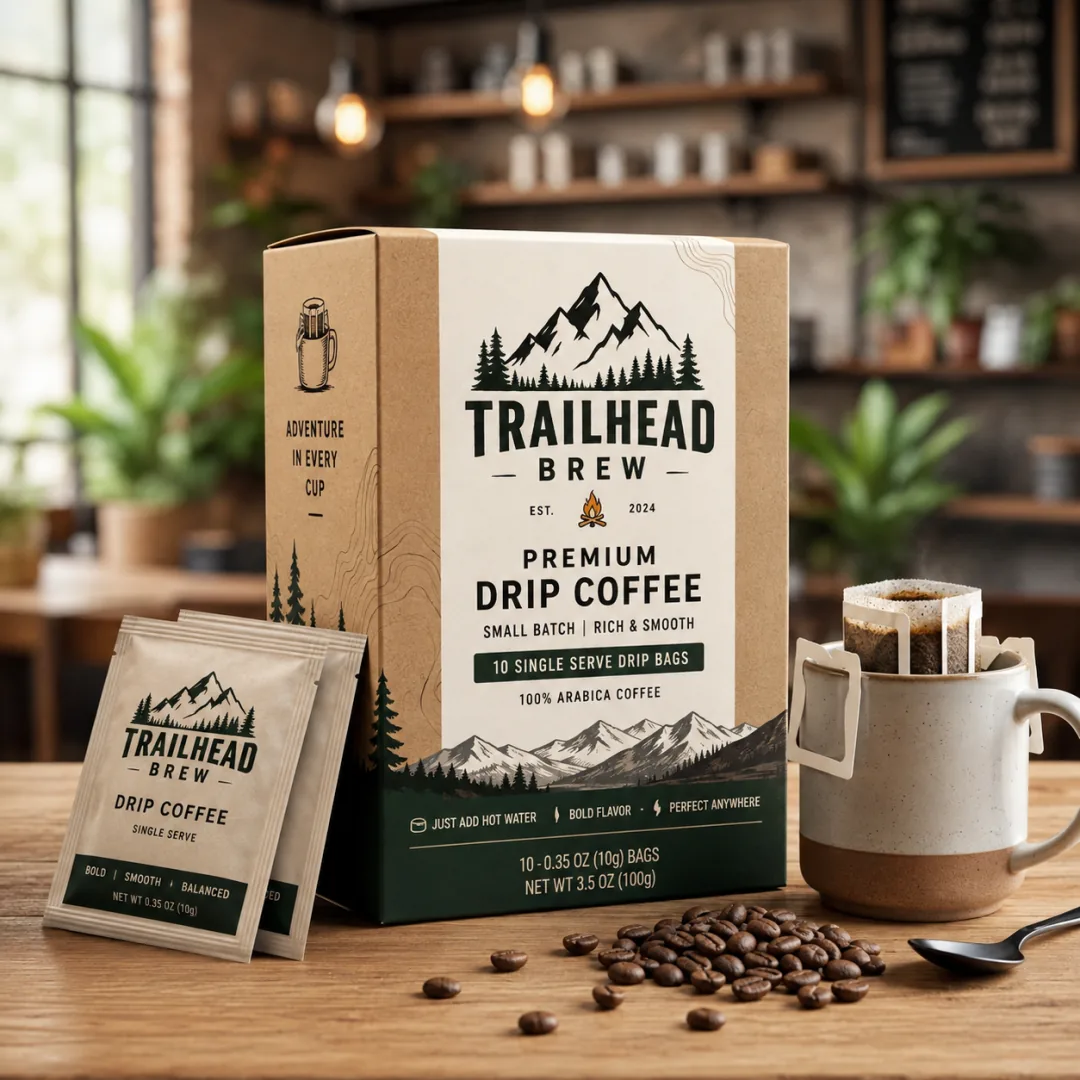
A small flat sachet is worth considering when the customer will use the entire portion for one planned preparation. Individually sealed units help keep the coffees separate, and their compact shape can support an organized assortment.
The format needs an accessible tear opening and enough clear space for the coffee name, quantity and preparation information. Avoid making the pack so small that essential text becomes difficult to read or filling becomes inconsistent.
A sachet generally does not provide the convenience of resealing. If the intended portion is likely to be used over several sessions, compare a resealable alternative. Ask the supplier about the available sealing construction, material and filling method rather than assuming all small flat packs perform alike.
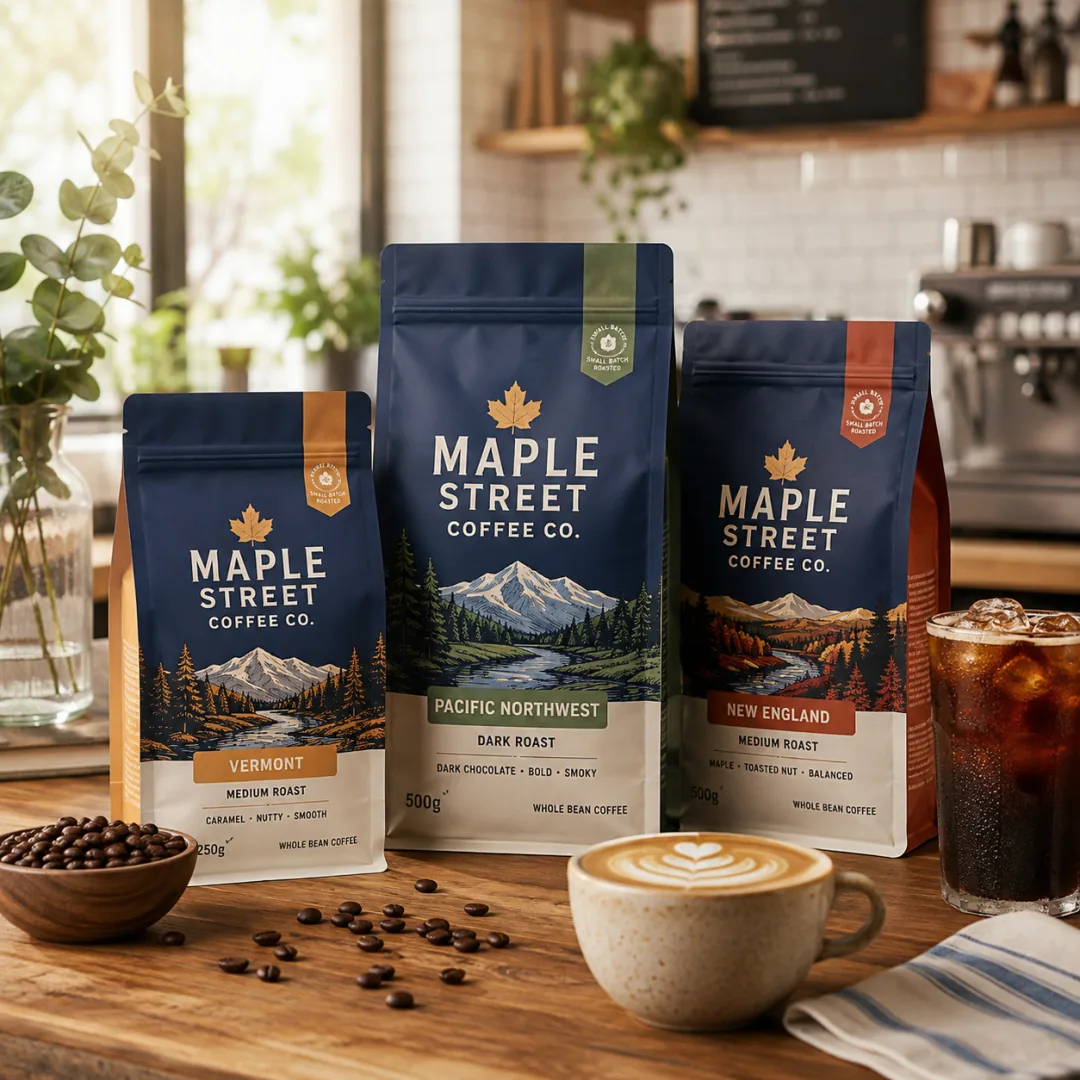
A discovery set may invite the customer to try the same coffee more than once. In that case, a resealable pouch can provide convenient access between sessions, with enough room to scoop or pour the beans.
AT PACK’s stand-up pouch range offers a starting point for discussing dimensions and closure options. Ask whether an appropriate smaller size is available. Where a more structured presentation is useful, a flat bottom bag can also be compared at the intended fill.
Resealing is a convenience feature; the initial seal and complete material construction still need to meet the product’s requirements. Check that the proposed sample weight looks proportionate, the closure is usable and the filled units fit the discovery box without unnecessary compression.
A drip sample can be useful for an introduction aimed at customers without grinding equipment. Clarify whether the product includes a brewing filter, an outer protective sachet or both, and confirm the supplier’s available configuration.
Give the recipient instructions that match the actual format. The amount of water, handling sequence and suitable cup arrangement should be verified for the product before printing. A clear explanation matters more than elaborate decoration on a very small surface.
Keep the comparison fair across the set. If some coffees are supplied as whole beans and others as drip portions, explain that difference. Customers should understand whether they are comparing coffees, preparation formats or both.
A wholesale buyer may need repeated brews, multiple tasters or several espresso adjustments. A larger resealable pouch is often worth considering because it can hold the agreed trial quantity and remain manageable between sessions.
Confirm the evaluation with the recipient before dispatch. Ask about the brewing equipment, number of participants, expected preparations and whether a later repeat trial may be needed. If the required quantity changes, revisit the bag dimensions and shipping arrangement.
Do not treat a small discovery portion as a complete equipment trial. A compact introductory pack can still be useful, provided its purpose is explicit and the buyer knows how to request a suitable follow-up sample.
Each bag needs an identifier that remains connected to the coffee after it leaves the shipping box. Record the product or sample code, whole-bean or ground format, relevant batch information and the preparation context supplied to the recipient.
For a structured professional tasting, agree the method and coding with the buyer. The Specialty Coffee Association’s Coffee Value Assessment resources provide context for organized coffee evaluation. A commercial sample set should not imply that packaging alone establishes a standardized or certified assessment.
If the buyer requests blind comparison, use agreed codes and retain the key separately. Otherwise, provide enough coffee identity for useful discussion. Keep the same codes in the dispatch record and feedback form so that comments cannot be confused between samples.
Wholesale feedback is more useful when it identifies the coffee and the conditions under which it was prepared. Include a concise space for preparation details and observations, together with a clear contact or response route.
The World Coffee Research Sensory Lexicon offers a common vocabulary for sensory attributes. It can support a more precise conversation, but printed tasting notes should not tell the buyer what they must perceive. Leave room for their own observations.
Keep purchasing details available without crowding the sample label. A separate sheet or maintained page can explain the proposed product range and next steps. Make clear whether the sample represents a current commercial coffee or a limited evaluation lot, so the buyer knows what a positive trial could lead to.
Small quantities still need appropriate protection. The National Coffee Association’s storage guidance identifies air, moisture, heat and light as relevant to coffee storage. Define the interval from roasting and packing to delivery and likely use when discussing the structure.
Confirm materials, sealing and any degassing requirement against that schedule. A short promotional campaign does not automatically remove the need for product validation. Likewise, a valve should be selected for the proposed coffee and process rather than added solely because it appears on a larger retail bag.
Request relevant food-contact evidence for the selected construction and intended market. The FDA’s guidance on food-contact material components explains the importance of components and conditions of use. Review the actual proposed pack and prepare labeling appropriate to its destination and distribution context.
In a discovery box, the recipient may remove the bags and discard or separate the insert. Put enough identification on each unit to preserve the link between coffee and instructions. Use consistent names or codes on the bag, card and online page.
A QR code can provide preparation guidance or a feedback form. DENSO WAVE’s QR code guidance explains the need for surrounding clear space. Test the code at the intended printed size on the actual pack, and keep its destination available after the campaign ends.
Check the physical assortment as well as its information. Verify that staff can distinguish similar variants and place the right number of each in the set. A shared base bag with approved variable labels can be practical for changing selections, provided label fit, readability and version control have been checked.
A discovery box organizes the assortment, but it still needs to protect the sample units through the intended delivery route. Confirm whether it is the shipping container itself or sits inside another outer pack.
Choose suitable tests for the complete configuration. The International Safe Transit Association’s test-procedure overview explains different approaches to evaluating packaged products in distribution. Use an appropriate test plan and inspect the sample bags, seals and identification after the trial.
A limited dispatch to representative recipients can also reveal practical issues: confusing labels, difficult opening, insufficient quantity or instructions that do not match available equipment. Record those findings before committing to the full campaign.
When briefing AT PACK about coffee sample packaging, include:
Confirm the formats and sizes available for the project, then approve a filled sample and complete set. Compare quotations on the same specification, including printing or labeling, assembly and shipping considerations where relevant.
Conclusion:
The best coffee sample packaging depends on the evaluation it supports. Sealed portion sachets can suit a defined single use; resealable pouches can support several brews; drip portions can provide a convenient introduction. Wholesale samples should provide enough coffee and information for the buyer’s agreed test.
Select the format after defining that task, then check filling, protection, identification and delivery as a complete system. A useful sample is one the recipient can prepare, evaluate and discuss with a clear understanding of the coffee received.
Q: What is the best packaging format for a coffee discovery box?
A: A sealed sachet can suit one planned preparation, while a small resealable pouch can suit several brews. A drip portion may be appropriate when the intended recipient needs a preparation format without a separate grinder.
Q: How much coffee should a wholesale sample contain?
A: Agree the test with the buyer. Calculate the quantity from planned preparations and participants, including coffee needed for equipment adjustment or repeat evaluation where relevant. There is no universal fill for every wholesale sample.
Q: Does every small coffee sample bag need a degassing valve?
A: No universal rule applies. Discuss the coffee, roasting-to-packing interval, material, seal and intended use period with the supplier, then validate the proposed structure.
Q: Can the same bag be used for discovery sets and wholesale samples?
A: Possibly, if the capacity, opening and protective requirements suit both. The quantity, information and intended test may differ, so review each application instead of assuming one small format covers every need.
Q: What should be checked before launching a sampling campaign?
A: Check representative filled samples, preparation quantity, label accuracy, instructions, seal condition and complete-set shipping performance. Confirm that each recipient can identify the coffee and provide meaningful feedback.
Specialty Coffee Association — Coffee Value Assessment
World Coffee Research — Sensory Lexicon
National Coffee Association — Storage and Shelf Life
U.S. FDA — Regulatory Status of Food-Contact Material Components
DENSO WAVE — Determining the QR Code Area
International Safe Transit Association — Test Procedures
AT PACK — Custom Coffee Packaging for Single-Serve Product Lines
