
Introduction:
A single 90 mm rim diameter lets cafes cover 12 oz to 24 oz cold cups with one lid family, cutting identification mistakes at the counter.
Anyone who has worked a busy drink station knows the moment: three orders in progress, two cup sizes on the counter, and a lid that almost fits but not quite. The cup gets set aside, a new lid is grabbed, and the line slows down. That small hesitation repeats hundreds of times a day in cafes that stock multiple cup sizes.
The fix is not more training or better labels. It is rim standardization — designing the cup system so that every capacity shares the same top diameter even when the cup holds very different volumes.
This guide explains how a 90 mm rim standard works, why it reduces lid confusion, and why cup capacity and lid size are two separate specifications that happen to travel together in cafe cold drink service.

Why 90 mm Cup Rims Became a Shared Standard in Cold Drink Service
Cup Rim Diameter and Cup Capacity Are Different Specifications
Cup rim diameter is the width across the very top edge of the cup, measured in millimeters. It is not the same as cup capacity, which is the volume of liquid the cup holds.
A 12 oz cup and a 24 oz cup can both have a 90 mm rim if the cup body is shaped differently below the rim — narrower and shorter for the small size, wider and taller for the large. The rim stays constant while the body changes. That is the whole idea behind a shared rim standard.
Why the 90 mm Rim Works for Cold Drink Service
The 90 mm size became common in cold drink service because it sits in a practical middle ground. It is wide enough to accept a straw and thick enough for a secure snap-fit, but not so wide that the cup feels unstable in a standard cup holder.
For a cafe, the operational value is immediate. When every cold cup from 12 oz to 24 oz shares the same 90 mm rim, the cafe stocks one family of lids instead of three or four. Staff do not need to match a lid to a cup size. They pick up any 90 mm lid and it fits the next cup on the counter.
That single-rim approach also simplifies storage. Lids nest and stack more predictably when they are all the same diameter. Reordering is simpler because there is only one lid specification to track. And during rush periods, the cognitive load drops. Baristas stop sorting lids by size and start moving drinks out the door.
The Specialty Coffee Association's education materials on cafe workflow support this idea: reducing decision points at the bar improves speed and consistency in beverage service.
One rim diameter is not just a packaging detail — it is a workflow decision, and it is the kind of decision that pays off every hour the cafe is open.
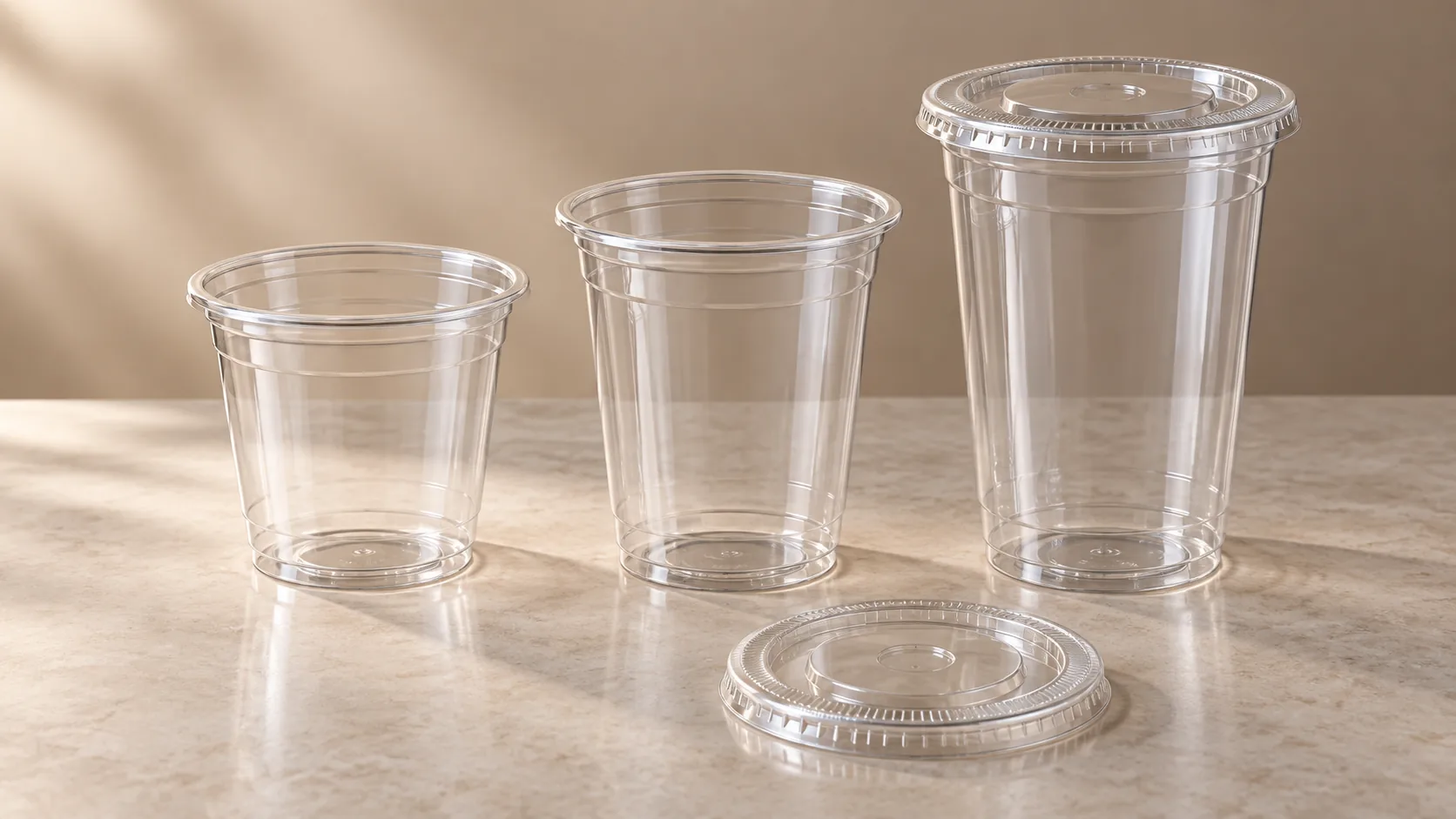
How One Rim Diameter Works Across 12 oz, 16 oz, and 24 oz Cups
A Fixed Rim With a Variable Cup Body
A 90 mm rim can sit on top of cups with very different capacities because the rim is a fixed interface and the cup body is a variable volume.
Think of the rim as a door frame. The door frame stays the same width, but the room behind it can be a closet or a hallway. In cup terms, the 12 oz cup might be shorter and narrower through the body, the 16 oz cup slightly taller, and the 24 oz cup taller still. All three share the same 90 mm opening at the top.
The lid only cares about that opening. It does not know or care how much liquid is below it.
Why Cup Size Does Not Automatically Determine Lid Size
This is why capacity labels and lid labels describe two different things. A cafe menu might list a 12 oz iced latte and a 24 oz iced tea, but both drinks use the same 90 mm lid.
The capacity tells the customer how much they are getting. The rim diameter tells the barista which lid to grab.
Keeping those two ideas separate prevents a common confusion: assuming that a bigger cup must need a bigger lid. In a standardized cup system, it does not. The cup grows downward, not outward at the rim.
1. Cup Capacity Changes the Drink Volume but Not the Lid Rim Diameter
The cup body below the rim is where capacity lives. A 12 oz cup holds less because its walls are shorter or narrower, not because its top opening is smaller. A 24 oz cup holds more because there is more room below the same rim.
This design choice is deliberate. It means a cafe can offer a range of drink sizes without multiplying the number of lids it needs to stock.
The product line follows this logic directly: the same 90 caliber rim runs across 12 oz, 14 oz, 16 oz, and 24 oz cups, and a matching 90 caliber lid fits all of them.
For an operations learner, the takeaway is simple. When you see two cups with the same rim diameter but different ounce labels, that is not a mistake. It is the standard working as intended.
2. Dimensional Tolerance Determines Whether a 90 mm Lid Snaps on Smoothly
A 90 mm rim only works if the lid actually fits it, and that depends on dimensional tolerance — how much the real manufactured size is allowed to vary from the stated size.
NIST's Standards. gov explains that tolerance is a normal part of manufacturing: no two molded parts come out exactly identical, so engineers define an acceptable range. For a cup and lid system, that range has to overlap.
If the cup rim is slightly too wide or the lid slightly too tight, the lid will not snap on without force. If the rim is too narrow, the lid will feel loose. A well-made 90 mm system keeps cup rims and lid skirts within a tolerance band that produces a smooth, consistent snap.
Why Manufacturing Tolerance Matters in Daily Cafe Use
That snap matters more than it might seem. When a lid seats properly, it stays seated during handling and transport. When it does not, the lid can pop off or leak at the rim.
Tolerance is not a visible feature, but it is the reason one 90 mm lid feels right on a 12 oz cup and just as right on a 24 oz cup.
It is also why cafes should avoid mixing lid brands with cup brands unless the tolerances are known to match. A 90 mm lid from one supplier and a 90 mm cup from another may both be labeled correctly and still fit poorly.
The standard defines the nominal size; tolerance defines whether the pair actually works together in daily service.

What a Shared Rim Diameter Changes in Lid Identification and Daily Workflow
Fewer Lid Decisions During Peak Service
The most visible benefit of a shared rim diameter is what disappears from the counter. There is no bin of small lids and another bin of large lids. There is one lid supply.
During a morning rush, a barista building a 16 oz iced americano and a 24 oz cold brew reaches for the same lid without checking a size code. That single motion saves a second or two per drink. Across a few hundred drinks a day, those seconds add up to real labor time and fewer order errors.
A Simpler System for Staff Training
There is also a training benefit that cafe operators often notice. New staff learn one lid. They do not need to memorize which lid goes with which cup, and they do not need to ask a coworker during a rush.
The Specialty Coffee Association's education resources emphasize that consistent, repeatable bar workflow supports both speed and drink quality. A single-rim system puts that consistency into the packaging itself.
The cup tells the barista nothing about capacity at the rim, and that is the point — the rim is the same, so the lid decision is always the same.
Simplifying Lid Inventory and Reordering
Inventory management changes too. A cafe that stocks four cup capacities but one lid size carries fewer lid SKUs, which means less shelf space, simpler reorder points, and less risk of running out of one lid size while another sits unused.
The cup system described here supports this directly — it is available in stock and custom-printed options, so a cafe can start with standard lids and later move to printed lids without changing the rim specification. The rim stays 90 mm; only the surface decoration changes.
For anyone learning cafe operations, that is the operational lesson: standardize the interface, vary the presentation. The lid inventory stays small, the cup menu stays flexible, and the counter keeps moving.
Conclusion
A 90 mm cup rim is a small specification with a large operational footprint. By keeping the rim diameter constant while cup capacity varies from 12 oz to 24 oz, a cafe can stock one lid family, train staff on one fit, and remove a recurring decision point from the busiest part of the day. Cup capacity still matters to the menu and the customer, but it no longer dictates which lid goes on which cup. That separation — capacity for the drink, rim diameter for the lid — is what makes the system work. Cafes evaluating cold cup options can look for a 90 caliber rim as a practical starting point, then confirm that the cup and lid tolerances are designed as a matched pair.
FAQ
Q:What does 90 mm mean on a commercial plastic cold cup?
A:It is the diameter of the cup's top rim, measured across the opening. That 90 mm rim is the surface the lid snaps onto, and it stays the same even when the cup holds different volumes. It is a fit specification, not a capacity measurement.
Q:Can 12 oz and 24 oz cold cups use the same 90 mm lid?
A:Yes, when both cups are made with a 90 mm rim. The 12 oz cup holds less because the body below the rim is smaller, not because the rim is narrower. The lid only contacts the rim, so the same 90 mm lid fits both. The cup system described here covers 12 oz, 14 oz, 16 oz, and 24 oz with one 90 caliber rim and a matching lid.
Q:Why do cafes use one rim diameter across different drink capacities?
A:It simplifies lid handling. One lid size means fewer SKUs to store, fewer chances to grab the wrong lid during a rush, and easier training for new staff. The menu can still offer multiple drink sizes because capacity is controlled by the cup body, not the rim. The result is a faster, more consistent counter workflow without limiting the drink menu.
Sources / References
Education - Overview — Specialty Coffee Association
