
Introduction:
Coffee shop and milk tea brands can turn a clean logo file into printed cups with lids by planning artwork for a curved surface, choosing print placement, and reviewing a physical sample before production.
The practical challenge is moving a logo onto a curved clear cup and a 90 caliber lid without losing edge clarity, brand focus, or print balance. From artwork to sample, the key decisions are artwork preparation, print placement, and sample review.
Curved cup printing starts before ink touches plastic. A logo that looks sharp on a flat screen can behave differently when it wraps around a round cup body. The file needs clean edges, clear spacing, and a layout that accounts for the curve. If artwork is prepared like a flat label, the logo may stretch, crowd the seam area, or sit at an angle that changes how customers read it. Good preparation keeps the design recognizable from the main viewing angle and gives the printer a stable path for curved-surface registration.
Vector artwork is built from paths and shapes, so edges stay crisp when the file is scaled. That matters on a cup because the same logo may need to fit 12 oz, 16 oz, and 24 oz sizes without turning soft or jagged. A vector file also makes it easier to adjust stroke weight, letter spacing, and small details for wrap printing. If a logo is supplied only as a flat raster image, the production team may need to rebuild parts of it, which can change fine lines and letter shapes. For custom printed plastic cups with lids, a clean AI, PDF, or PSD file gives production a much better starting point.
A clear cup body changes how ink reads. On a white paper label, colors sit on a solid background. On a high-permeability clear cup, light passes through the plastic and through the drink behind it. Thin ink can look weaker over a dark cold brew or a bright fruit tea. Opaque underlays, heavier coverage, and careful contrast help the logo stay readable. The transparent areas around the logo also become part of the design, so negative space, drink color, and condensation can affect the final look. A logo with light pastel tones may need stronger outlines or a more defined shape on a clear cup.
The tradeoff is simple: a detailed logo can look impressive on a flat screen, but curved-surface printing rewards simplification. Fine hairlines, tiny text, and complex gradients may need to be reduced or separated so the printed version stays clean. The goal is to choose a version that survives the curve, the clear material, and the speed of a working coffee shop.
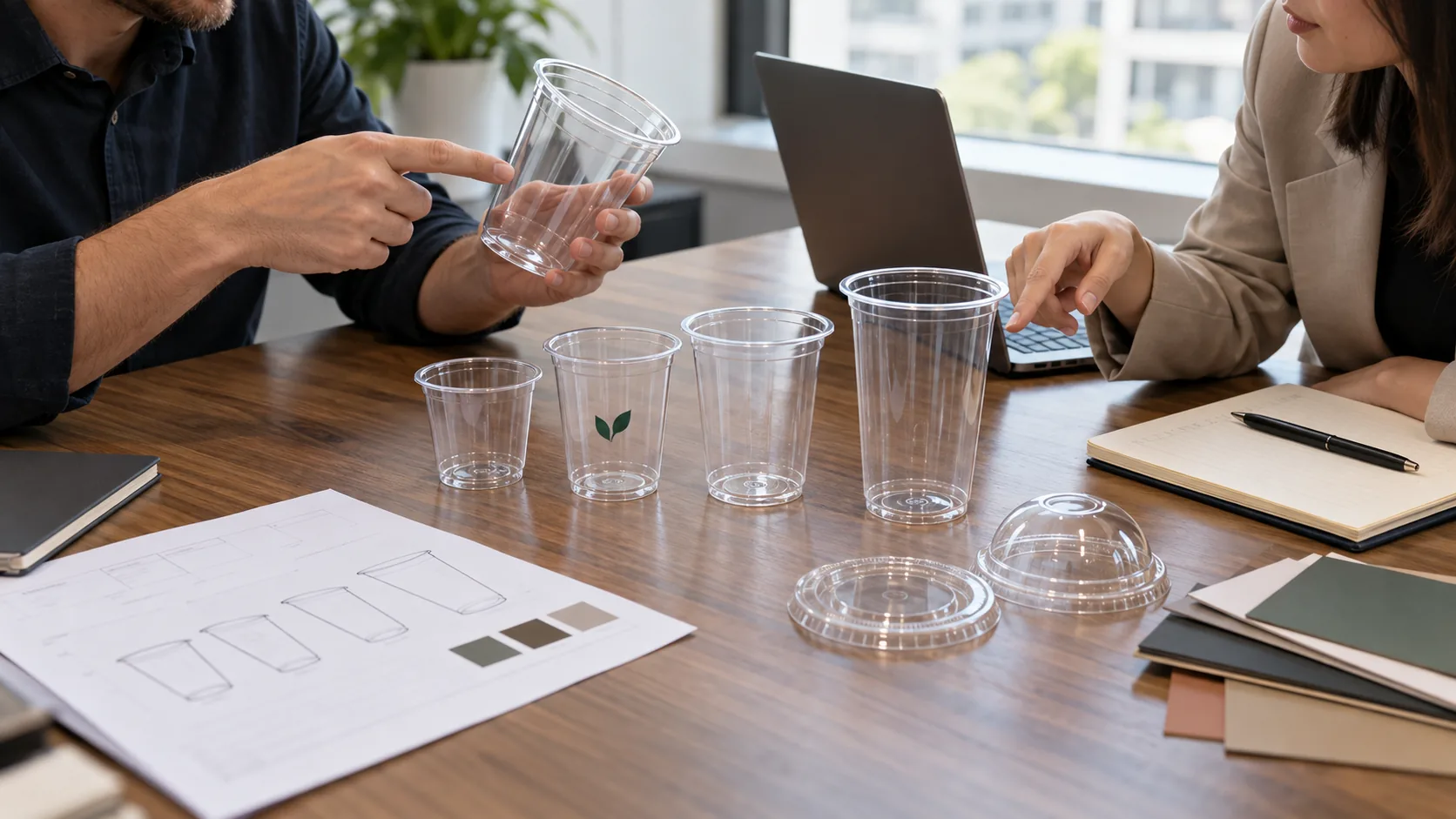
Print placement is both a brand decision and an operational one. On the cup body, decide what customers see first. A logo centered on the front works for counter display. A logo placed near the top can stay visible when the cup sits in a carrier. A wrap design can create a stronger band of color, but it also needs to account for how the cup is held and how the drink is viewed.
Scale matters too: a logo that fills too much of the cup can feel heavy, while one that is too small can disappear behind ice, milk, or condensation. The right size depends on cup capacity, drink style, and the distance from which customers usually see the cup.
The 90 caliber lid adds a second print surface. Lid registration is the alignment between the lid print and the cup body print. If the lid carries the same logo, position the artwork so the mark stays readable when the lid is snapped on and turned by staff. Functional areas such as the drinking opening, straw slot, or vent also affect placement. Print should not sit where it will be covered by a thumb, a straw, or a lid feature that changes with the lid style.
A practical way to decide is to ask what customers should notice first, then place the strongest brand element where that view happens. For many brands, the cup body carries the main logo and the 90 caliber lid carries a smaller mark, a short wordmark, or a matching color accent.
Placement also needs to support fast service. Baristas grab cups, add lids, and hand drinks across a counter or pack them for delivery. If the print position makes the cup look different from every angle, the brand can feel inconsistent even when the artwork is correct.
A simple test is to look at the cup from the front, the side, and the top. From the front, the main logo should be clear. From the side, the design should still feel intentional. From the top, the lid print should not compete with the drinking area. This is how a custom cup design stays useful in a real shop, not just in a flat mockup.
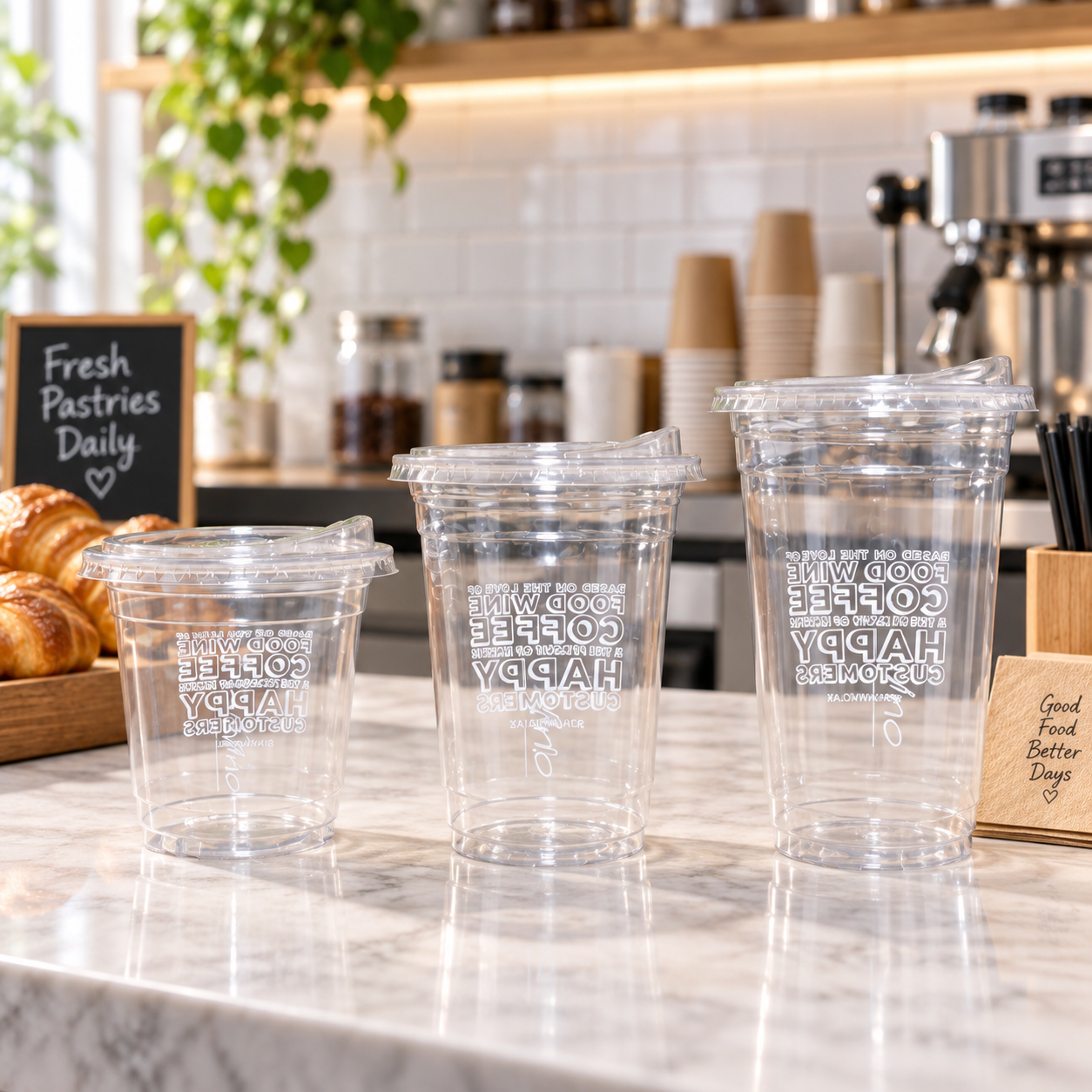
For custom plastic cups with lids, a physical print sample is the bridge between artwork and production. On screen, every logo looks clean. On a curved cup, you can see the real scale, the ink behavior on a clear body, the placement around the curve, and the relationship between the cup and the 90 caliber lid.
A sample review confirms the artwork version, print position, cup size, lid style, and overall visual balance. For a coffee shop, it answers a simple question: will this cup look like our brand when a customer is holding it, photographing it, or carrying it down the street?
Requesting a quote is easier when the main decisions are already made. Have an approved artwork version, choose a cup size from 12 oz to 24 oz, select the lid style, and confirm the print placement on both the cup body and the 90 caliber lid.
If the design will appear on a high-permeability clear cup body, note how much transparency you want around the logo. If the cup uses a thickened U-shaped base, check that the lower print area still reads well when the cup is full. These details help the supplier quote accurately and prepare a sample that reflects the real project.

AT PACK Coffee supports this path with design consultation, AI/PSD/PDF file intake, 2-3 week sampling, and 24-hour quotation support. Stock and custom-printed options are available for brands at different stages of a cup program. Before production, review the physical print sample and approve the final artwork. That step keeps the project focused on the cup your customers will actually see.
Custom printed plastic cups with lids work best when artwork, print placement, and sample review are treated as one process. Start with a clean vector file, adapt the logo for a curved clear cup, decide what customers should see first, and check the 90 caliber lid as carefully as the cup body. A physical sample turns those decisions into something you can hold. When you are ready, send your AI, PSD, or PDF artwork, choose a 12 oz to 24 oz cup size, confirm the lid style, and ask for a custom print sample and quote so your next production run matches the brand experience you want to serve.
A:A vector or layered source file is best. AI, PDF, and PSD files give the production team clean edges, editable text, and a clear layout for curved cup printing. If you only have a flat image, the design may need to be rebuilt. Include the logo version, any brand colors, and a note about which elements must stay sharp on the cup body and 90 caliber lid.
A:Yes. The cup body and 90 caliber lid can both carry custom printing. The practical point is registration and scale. A full logo may work on the cup body while a smaller mark, wordmark, or color accent works better on the lid. Keep the drinking opening, straw slot, or vent in mind when placing lid artwork.
A:Check the artwork version, print position, cup size, lid style, and visual balance. Look at the logo on the curved clear cup from the front, side, and top. Confirm how the print reads over a filled cup and how the lid print lines up when the lid is placed. Approve the final artwork and physical sample before production so the run matches your approved design.
Flexographic Technical Association
Library | PRINTING United Alliance
APR Design Guide Overview | Association of Plastic Recyclers
