
Introduction:
Decide whether a branded sleeve improves hot service and branding, or whether a different cup construction and a tested fit already cover the need.
A buyer orders custom coffee cup sleeves after the cups are already in stock. The first shipment shows sleeves that ride up when staff fit lids, print that scuffs after a short walk, and a cost line that was never compared with moving some drinks to double-wall cups. Three supplier quotes list different sleeve sizes against the same ounce labels, so the unit prices cannot be compared.
Custom coffee cup sleeves can add handling comfort and a second brand surface, but only when they fit the cups already in use and when the service model needs that layer. This guide covers when a sleeve adds value, how to confirm fit and print, and how to plan cost and replenishment with related packaging.
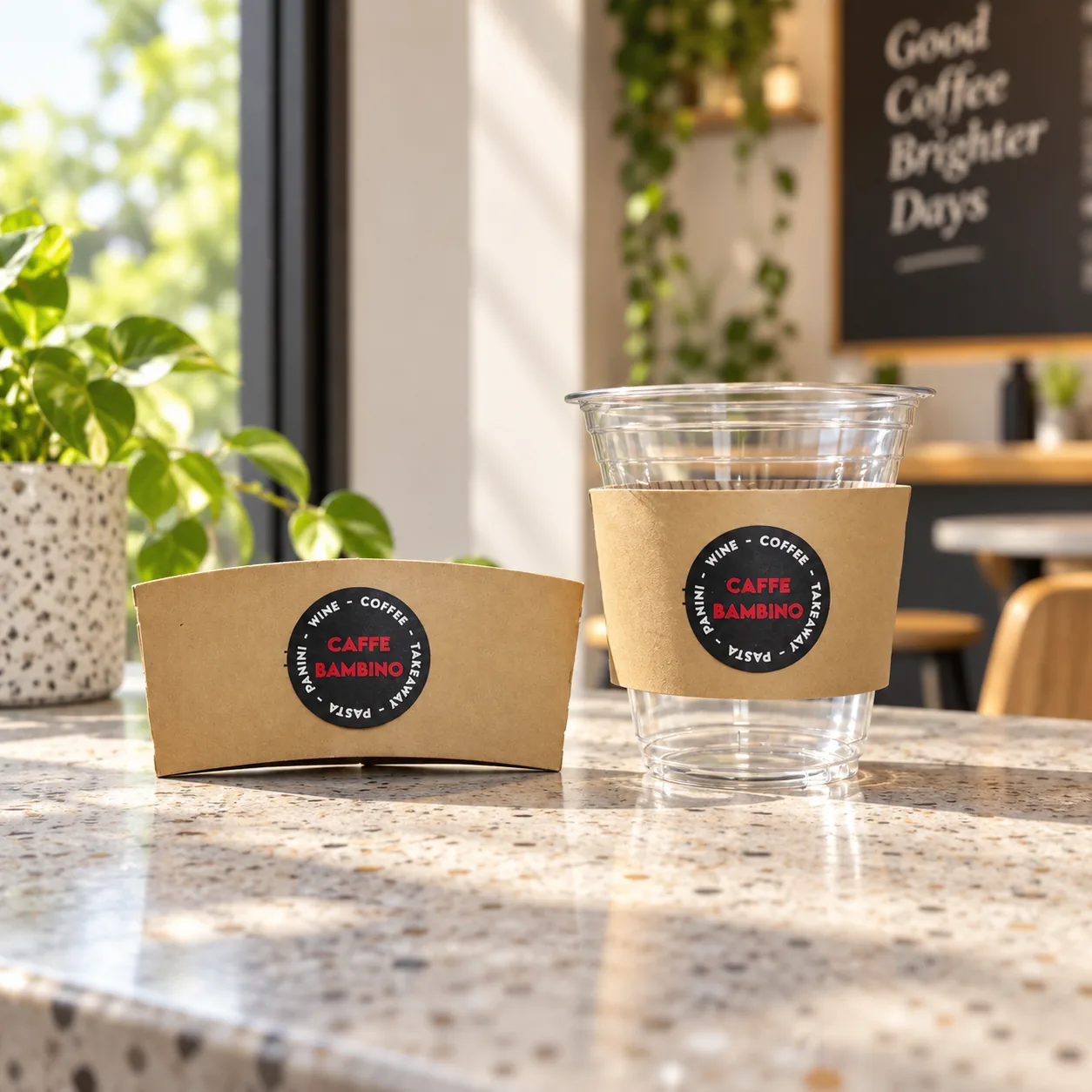
Hot single-wall service often needs a sleeve for grip and heat protection during handover, especially for larger drinks carried outside the store. AT PACK's cup sleeves collection describes sleeves as an added layer of comfort, protection and branding for takeaway coffee, and notes that they can be coordinated with paper cups, lids, carriers and bags. That role is clearest when cups are single-wall and customers handle drinks away from the counter.
A double-wall or thicker construction may reduce or remove the need for a separate sleeve, but that outcome is not automatic. AT PACK's kraft sleeve product page describes a double-layer kraft and corrugated construction, lists compatibility with single-wall, double-wall and other cups, and offers 8 oz, 12 oz and 16 oz volume options. Buyers may still order sleeves with double-wall cups for branding or comfort. Fill representative samples, time a normal handover and walk, and compare the complete serving cost of a single-wall cup plus sleeve against a double-wall option before deciding. Do not treat either path as always cheaper or always better.
Ounce labels do not define sleeve fit. Two 12 oz cups can differ in taper, wall thickness and rim profile, so a sleeve sized only by ounce may slip, sit too high or block lid seating. AT PACK's sleeve collection states that compatibility depends on cup diameter and shape, and asks buyers to provide cup details before production. Record the mid-wall diameter, height and approved lid for each cup size, then request sleeve dimensions that match those cups.
Test the sleeve on a filled cup with the lid fitted, then place the drink in a carrier and a takeaway bag. Check whether the sleeve stays in place when the cup is lifted from the counter, whether it covers critical cup artwork, and whether it interferes with carrier openings. AT PACK's paper cup collection and cup carriers collection are useful starting points when discussing cups and handling accessories together. Keep one approved physical combination as the reorder reference.
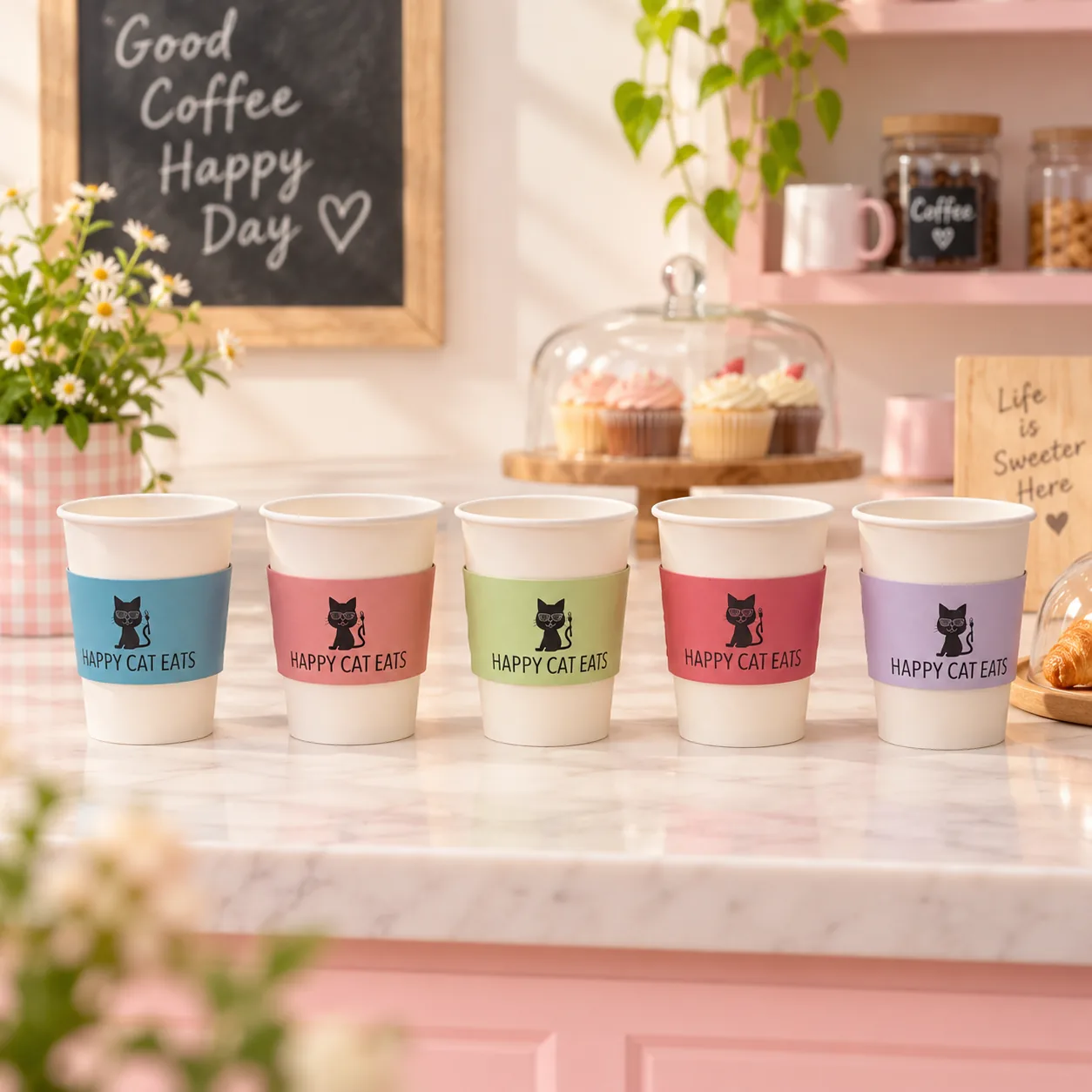
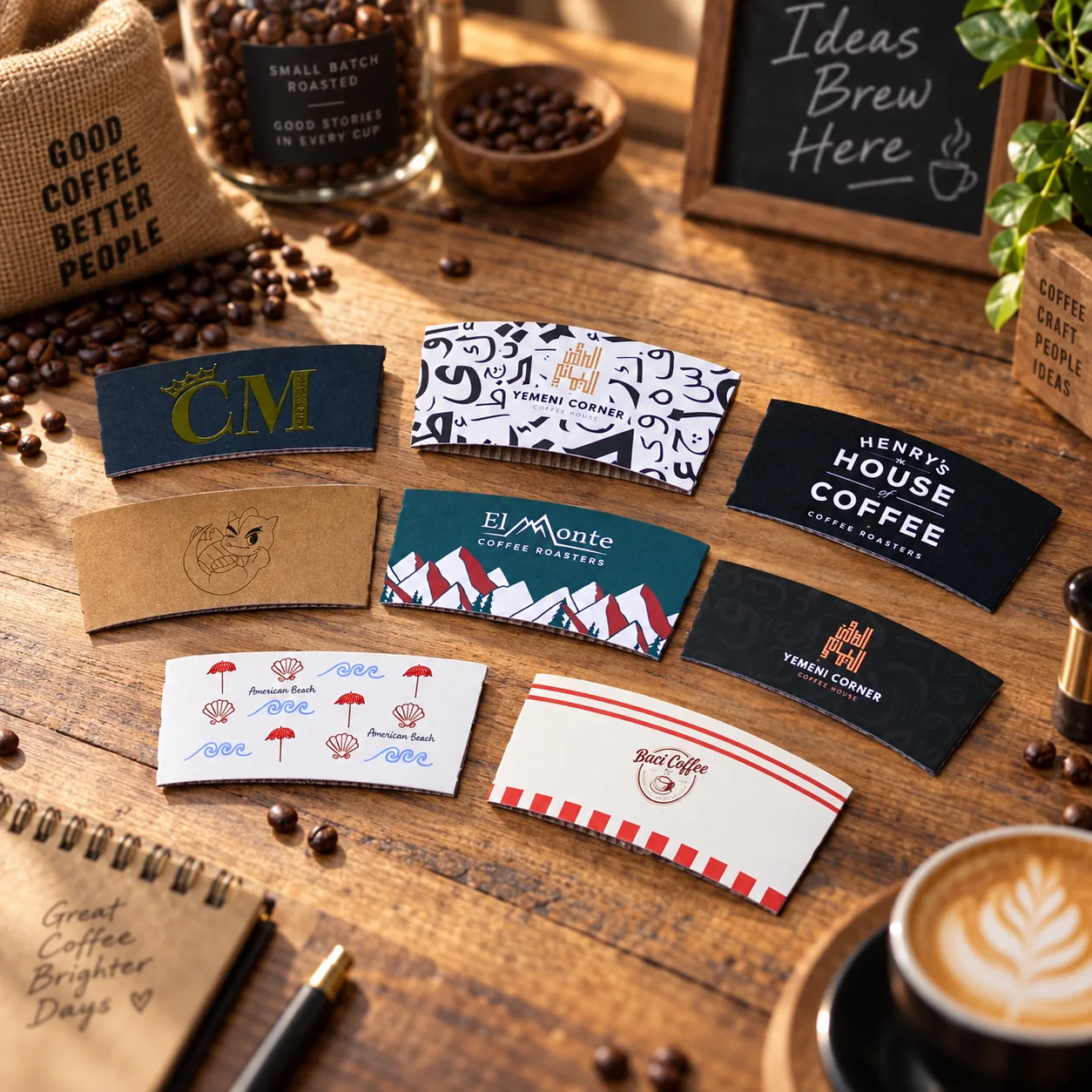
A sleeve offers a limited panel. Logos, seasonal messages and campaign lines need to be sized for that panel, not copied from flat cup artwork. Confirm bleed, safe areas and colour settings against the supplier's sleeve template. Adobe's guidance on printer's marks and bleeds explains why artwork may extend beyond a cutting edge, but the production settings must match the sleeve die. AT PACK's kraft sleeve page confirms custom logo printing and customization of sleeve size, paper material, colours, patterns and design styles.
Approve artwork on a printed sleeve already fitted to the working cup, not only on a flat proof. Check logo placement relative to the grip zone, seam alignment and contrast against kraft or printed backgrounds. AT PACK's brand identity services cover logo applications, colour systems, typography and packaging guidelines across cups, sleeves and takeaway bags. Record the approved file version for production.
Compare landed cost for the full serving combination: cup, sleeve if used, lid, labour to apply the sleeve, storage volume and waste. A lower sleeve unit price can still cost more once labour and mismatched inventory are included. Keep kraft and corrugated sleeves dry before use; DS Smith's corrugated storage notes cover humidity effects on flutes. The kraft sleeve product page does not publish a fixed minimum order quantity, so confirm quantity, design count and whether minima apply per size or artwork in the quotation.
Plan replenishment against the hot-drink mix rather than a generic sleeve count. AT PACK can coordinate sleeves with paper cups, lids, carriers, paper bags, brand identity work and supply chain planning through a shared brief. Confirm availability and timing for each item separately, and keep approved samples so reorders match the tested fit.
Conclusion:
Custom coffee cup sleeves add value when they improve handling or brand display under real service conditions, and they add cost when the cup construction already meets those needs or when fit has not been proven. Decide with filled samples, then lock the specification before volume orders.
Send AT PACK the cup sizes and wall types already in use, sleeve dimensions if known, artwork, quantities by design, destination and timing to request a coordinated proposal for sleeves and related packaging.
Q: Do double-wall cups always make sleeves unnecessary?
A: No. Validate grip and heat comfort with filled samples. Some buyers still use sleeves for branding or longer carry times.
Q: Can one sleeve size cover every ounce cup on the menu?
A: Do not assume that. Confirm diameter and taper for each cup; same ounce labels can require different sleeves.
Q: What information is needed for a sleeve quotation?
A: Provide cup size and shape details, preferred sleeve material, artwork, quantity and delivery location, as listed on AT PACK's sleeve pages.
Adobe — Printer's Marks and Bleeds
DS Smith — Storage of Corrugated Material
AT PACK — Custom Printed Kraft Coffee Cup Sleeves
